– The Academy of Neurologic Therapy –
As arguably the most pervasive stimulation on the human brain, music is not only able to support us psychologically, socially, and emotionally, but also to promote changes in our brains.
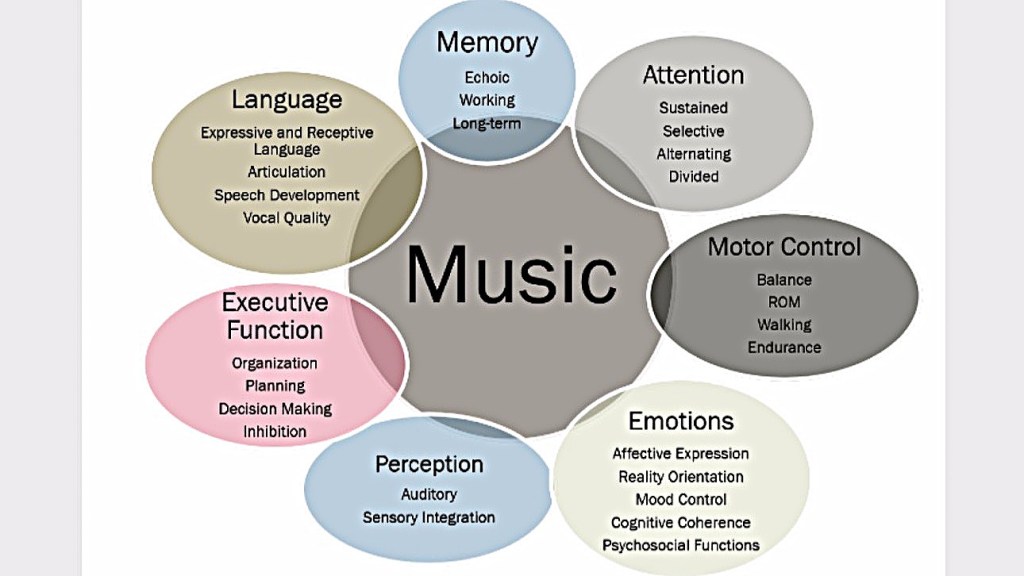
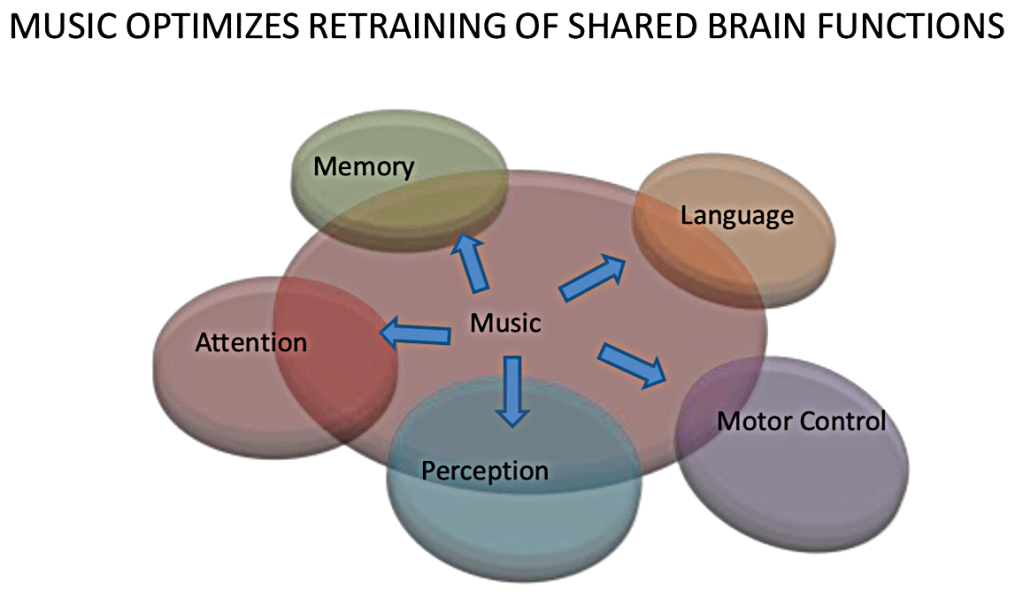
When we engage in music, whether it is listening, singing, or playing an instrument, all areas of our brains are activated. Different from the standard approach of music therapy, the core theory, treatment, and clinical techniques of Neurologic music therapy (NMT) are based on the neuroscience model of music perception and production; as well as how music influences the functional changes in non-musical brain and behaviours.
– The Academy of Neurologic Therapy –
In NMT work, therapeutic goals and interventions often address rehabilitation, development, and maintenance of functional behaviours. Music is used not only to help in training functional skills, but also in building pathways in the brain for better communication, coordinated motor movements and cognitive skills. There are 20 standardised clinical techniques established in the current NMT field, and the three main domains in NMT are: Speech & language, Sensorimotor, & Cognition.
Conditions that can be addressed through NMT include, but are not limited to:
- Alzheimer’s disease
- Autism
- Cerebral palsy
- Huntington’s disease
- Parkinson’s disease
- Stroke
- Traumatic brain injuries
- Neurological diseases affecting cognition, movement, and communication (e.g. Muscular dystrophy)
————————————————————————————–
More information and resources about Neurologic Music Therapy can be found on The Academy of Neurologic Music Therapy (https://nmtacademy.co/).
There are videos demonstrating applications of NMT sessions are available online and can be found on platforms such as YouTube, For example, MedRhythms YouTube Channel (https://youtu.be/pzenDIwFllw).
 Astar Music Therapy | Scotland